Goodfellow Slim Fit vs Straight Fit Tech Chino: Which Cut Flatters Your Build and Wardrobe?
We built our Tech Chino lineup around two distinct silhouettes — slim fit and straight fit — because no single cut works for every build, task, or style preference. The difference isn’t just about trend; it’s about how the pant moves with you, where it hits your shoe, and whether it feels snug or relaxed through the thigh.
In this guide we walk through the key measurements that separate our Goodfellow & Co Men’s Slim Fit Tech Chino Pants from the Goodfellow & Co Men’s Straight Fit Chino Pants, explain which body types and occasions each cut serves best, and help you decide which silhouette belongs in your rotation.

Leg Opening and Taper: Where the Two Cuts Diverge Most
The most visible difference between slim fit and straight fit lies in the leg opening — the circumference at the ankle. Our slim-fit Tech Chino tapers from a 16-inch thigh down to a 14.5-inch opening, creating a clean, modern line that sits close to the ankle without clinging.
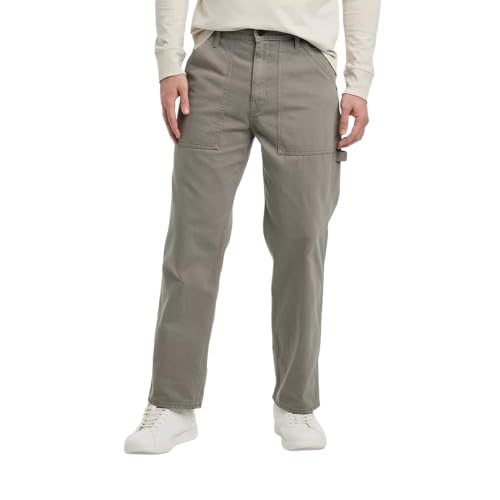
The straight-fit version holds a consistent 17-inch measurement from knee to hem, which means the pant falls straight down from the widest part of your thigh with no taper. This cut leaves more room around the calf and ankle, so it pairs naturally with chunkier footwear like work boots or high-top sneakers.
If you prefer a streamlined silhouette or plan to wear low-profile shoes, the tapered leg of the slim fit prevents fabric from pooling at the ankle. If you value airflow, ease of movement, or a relaxed drape, the straight fit’s uniform width delivers that without restriction.
Rise and Seat: How Each Fit Sits on Your Waist and Hips
Rise — the distance from crotch seam to waistband — affects both comfort and where the pant sits on your torso. Our slim-fit Tech Chino uses a 10-inch front rise, which positions the waistband slightly below your natural waist for a contemporary, mid-rise feel.
The straight fit carries an 11-inch rise, sitting closer to your natural waistline and offering more coverage through the seat and lower back. This higher rise also reduces the chance of the waistband digging in when you sit or squat, making it the better choice for physically active days or extended wear.
Trouser rise conventions have shifted multiple times over the past century, but the practical difference remains constant: a higher rise distributes pressure more evenly across your hips, while a lower rise creates a sleeker front profile.
Thigh and Hip Room: Matching the Cut to Your Build
If you have a muscular or athletic build — developed quads, glutes, or calves from cycling, lifting, or running — the straight fit’s extra room through the thigh and hip prevents the fabric from stretching tight across those areas. The slim fit can work for athletic builds if you size up one waist size, but that often leaves the waistband loose.
Conversely, if you have a slimmer or more linear frame, the slim fit’s closer cut through the leg prevents the pant from looking oversized or baggy. The straight fit will still work on a slim build, but you may need to hem the inseam shorter to avoid excess fabric stacking at the ankle.
Neither cut is inherently better — the right choice depends on whether you want the pant to follow the contour of your leg closely or drape with more ease.
Occasions and Styling: Which Fit Suits Your Wardrobe Needs
The slim-fit Tech Chino reads more formal in most contexts, making it the natural pick for business-casual offices, date nights, or any setting where a polished appearance matters. Its tapered leg pairs cleanly with dress shoes, loafers, or minimal sneakers, and the silhouette works under a blazer without adding bulk.
The straight fit leans casual and versatile — it transitions easily from a jobsite to a backyard cookout, and the extra room accommodates layering thermal underwear in cold weather or tucking in a thicker shirt without pulling. If your day involves kneeling, climbing, or bending frequently, the straight fit’s looser cut won’t restrict your range of motion.
Both cuts use the same four-way stretch twill and moisture-wicking finish, so performance stays consistent across silhouettes. If you wear dress shoes regularly or lean toward a streamlined aesthetic, the slim fit will see more rotation; if your style skews casual or your tasks demand mobility, the straight fit becomes the everyday workhorse.
Choosing the Right Tech Chino Cut for Your Build and Routine
The decision between our slim-fit and straight-fit Tech Chino comes down to three factors: your body’s proportions, the footwear you wear most often, and how much room you need for the tasks you do in these pants. Neither cut compromises on fabric performance or durability — the difference is purely in how the pant fits your frame and pairs with the rest of your wardrobe.
If you value a modern, tailored look and wear dress shoes or minimal sneakers regularly, the slim fit delivers that silhouette without excess fabric. If you prioritize comfort, mobility, or a relaxed drape, the straight fit gives you room to move and layers easily over boots or thermal base layers.
Most people settle into one cut as their default and never look back — the key is choosing based on your actual build and routine, not abstract style preference.
Questions About Choosing Between Slim and Straight Chinos
Yes, but you’ll likely need to size up one waist size to get enough room through the thigh and seat. The tradeoff is a looser waistband, which you can address with a belt.
If that compromise feels awkward, the straight fit offers more thigh and calf room at your true waist size without requiring any adjustment.
Height alone doesn’t dictate fit — leg proportion matters more. If you have longer legs relative to your torso, both cuts work equally well as long as you choose the correct inseam length.
Taller builds often prefer the straight fit because the wider leg opening balances out longer limbs, while shorter builds sometimes favor the slim fit’s taper to avoid a cropped or flood-pant look. Hemming the inseam to your exact measurement solves most proportion issues regardless of which cut you choose.
No — both cuts use the same Tech Chino fabric, a cotton-polyester-spandex blend with four-way stretch and a water-repellent finish. The difference in fit comes entirely from the pattern and measurements, not the material.
You’ll get the same moisture-wicking performance, wrinkle resistance, and mechanical stretch in either silhouette.
Yes — our internal label lists the fit name directly below the size. If you’ve misplaced packaging or bought secondhand, measure the leg opening with a tape measure: 14.5 inches or less indicates slim fit, 16.5 inches or more indicates straight fit.
The rise measurement also differs by about an inch, but leg opening is the fastest visual check.
If your current pair handles most of your needs comfortably, adding the opposite fit makes sense only if you have specific gaps — needing a dressier option for the office, or wanting more room for active tasks.
Many people find that one cut becomes their go-to and the other sits unused. Buy the second fit only if you’ve identified a real scenario where the first one doesn’t work.
Both fits use the same fabric, so shrinkage behavior is identical — expect minimal length loss if you tumble dry on high heat, and virtually none if you hang dry.
The slim fit’s tighter cut may make any shrinkage more noticeable through the thigh or calf, but the actual percentage change in measurements remains the same across both silhouettes.